Insurance belongs at the beginning of due diligence
If you are buying a home in the hills of Los Angeles, insurance is not something to deal with the week before closing. It is one of the first things to check, together with inspections, financing and title.
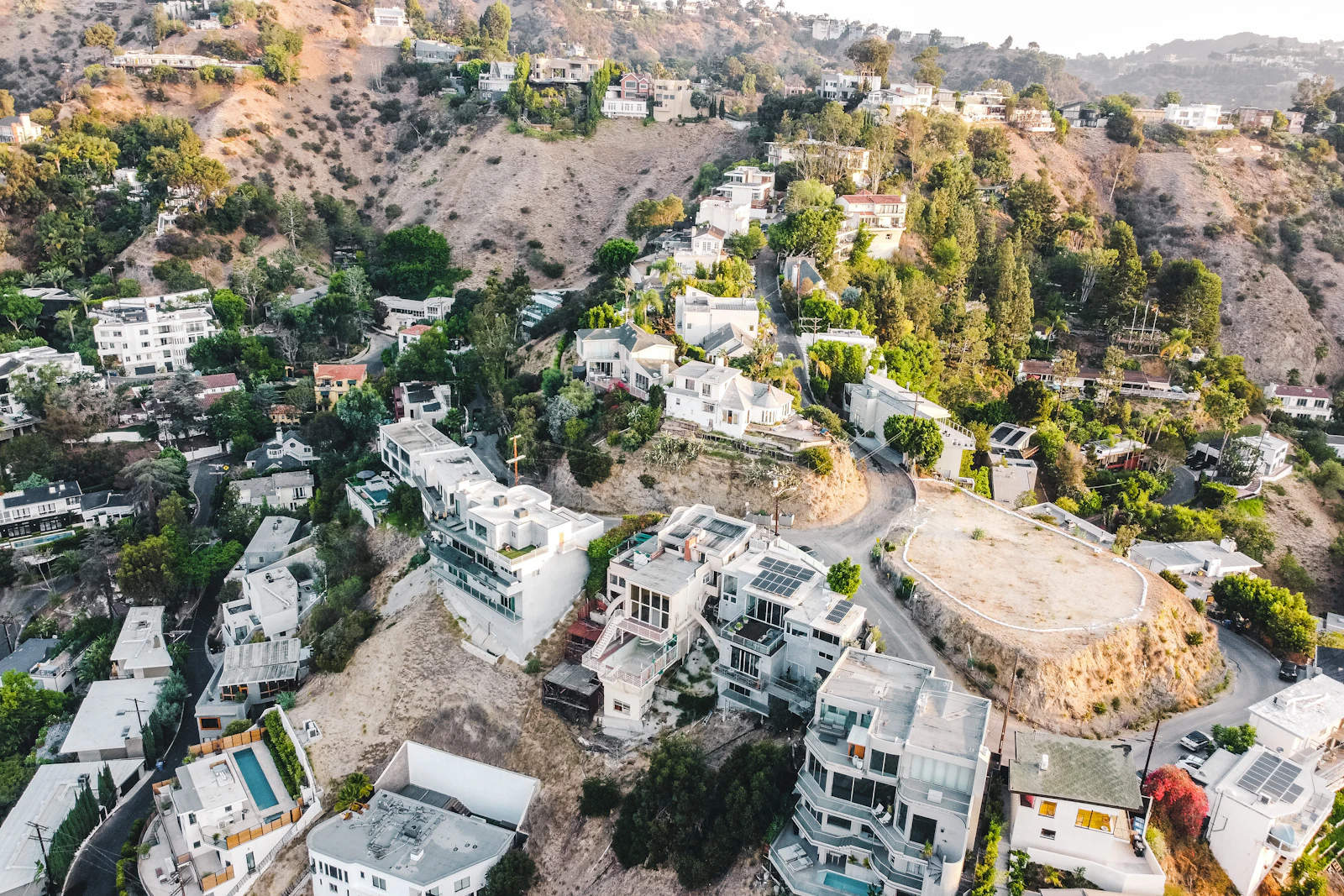
Since the 2025 fires, getting coverage in the hills can take more time, more paperwork and more money. Many hillside areas, including much of Bel Air, the Beverly Hills Post Office area and parts of Brentwood and the Palisades, are in a state Very High Fire Hazard Severity Zone. Check the exact address on the state fire hazard map.
A fire hazard map is a due-diligence tool, not an insurance quote. Insurers use their own risk models and underwriting criteria; the map alone does not decide your premium or whether coverage is available.
Two things to remember:
- The seller’s policy is not your policy. Their insurer may not offer you the same coverage or the same price.
- A quote is not a policy. Ask your broker what still needs to happen before coverage can actually start.
My buyer’s guide covers the full buying process. Insurance deserves its own checklist inside it.
A familiar process, a different kind of home
I helped clients buy a home in Bel Air who already owned a house in another Los Angeles neighborhood. They had insurance there and were working with a lending contact they trusted from a previous purchase. At first, they preferred to coordinate those arrangements themselves.
The difference was the property. Their current home wasn’t in the same kind of fire risk area, and finding coverage for the Bel Air home turned out to be more involved than they expected.
With a short contingency period, we worked together to get clear answers quickly. I helped them connect with insurance professionals and gather quotes from several providers. We needed to understand the available coverage, the total cost and whether it would meet their lender’s requirements.
The insurance ultimately needed to include the California FAIR Plan. This was a different process from insuring their previous home, with more questions to work through and more coordination between the insurance professionals and the lender.
This is why I encourage buyers to look into insurance early. Even if you already own a home in Los Angeles, buying in the hills can involve a very different process.
What to send an insurance professional
“How much is insurance in Bel Air?” is too general. Give your broker real information:
- The property address
- How you will use it: primary home, second home, rental, or empty during a remodel
- Building details from reliable records
- Your expected closing date
Don’t guess on the roof age, building materials, electrical work, square footage or fire safety features. Wrong information can cause problems later, even after you have a policy. Ask your broker which documents they need and who will get them.
Keep one written list for each quote:
- Which insurers were checked
- Documents still needed
- Estimated premium and when the quote expires
- Coverage limits and deductibles
- Conditions before the policy can start
- Whether your lender has approved it
This makes it much easier to compare quotes that look similar but protect you very differently.
Purchase price is not rebuilding cost
What you pay for the home includes the land and the market. Insurance is about what it would cost to rebuild the house itself. Ask your broker how they reached the dwelling limit, and whether it reflects the home’s features, today’s building codes and how hard it would be to rebuild on a hillside lot with a narrow road.
This matters even more in the luxury market. A higher limit does not solve everything. Ask what the policy covers, what has a lower sublimit and how claims are handled.
The California Department of Insurance has a homeowners insurance guide that explains the basic terms. Use it to ask better questions, then have a licensed broker explain your actual policy.
Compare the protection, not just the annual premium
Two quotes with the same price can protect you in very different ways. Compare:
- Deductibles, including any separate wildfire deductible
- What is excluded
- How a claim is paid (replacement cost or actual cash value)
- Limits for the house, your belongings and other structures
- Living expenses if you can’t live in the home after a covered loss
Don’t assume earthquake, flood, landslide or every kind of water damage is included. Ask your broker which risks need separate coverage and which may remain excluded.
On a hillside home, ask separately about retaining walls, guest houses, pools and large landscaping. And remember: a home inspection and an insurance review answer different questions. You need both.
Understand the FAIR Plan without treating it as equivalent coverage
If no regular insurer will offer reasonable coverage, your broker may suggest the California FAIR Plan. It is the state’s insurer of last resort, and many hillside owners use it today. But it is not the same as a normal homeowners policy:
- It covers a short list of risks, mainly fire, lightning, internal explosion and smoke.
- It does not include liability coverage.
- The residential FAIR Plan has a maximum combined coverage limit of $3 million per location. Ask your broker how that limit is allocated across your coverages.
So most buyers add a second policy, called a difference-in-conditions (DIC) policy, to cover things like theft, water damage and liability. For homes that would cost more than $3 million to rebuild, which is common in Bel Air and BHPO, you may also need extra coverage on top, or a separate high-value policy instead.
Compare the total cost and coverage of all the policies together, not just the first premium. And make sure your lender accepts the full package.
Coordinate insurance with the purchase timeline
Tell me and your lender right away if insurance is still open. Don’t remove your contingencies just because you expect a quote to come later.
A simple order to follow:
- Ask for an insurance review as soon as a home becomes a serious option.
- Give accurate property details and complete any required inspections.
- Compare coverage, exclusions, conditions and total cost.
- If you have a loan, have your lender confirm the coverage is acceptable.
- Confirm with your broker how and when the policy will be bound before closing.
Your purchase contract and lender may require different steps, so follow those first.
Mitigation and inspection findings
The roof, the plants around the house, building materials and upkeep can all affect what insurers offer. Ask your broker which improvements would actually change your coverage or price, what proof they need and whether the work must be done before the policy starts.
No single upgrade guarantees coverage or a discount. Before you agree to big work, know the cost, the timing and how it affects insurance. If the seller agrees to make a change, put it in writing and confirm it is done before closing.
Frequently asked questions
Can I use the seller’s insurance premium as my budget?
Only as a rough reference. Get your own quote based on your use, your coverage and your closing date.
Is insurance always more expensive in a hillside neighborhood?
Not always, but hillside homes in high fire risk zones usually take more work to insure. The price depends on the specific house, its fire zone, its condition and the coverage you choose. Compare real quotes.
Does paying cash eliminate the need to investigate insurance?
No. Without a loan, no lender requires insurance, but you still carry all the risk if something happens.
Is a home warranty a substitute for homeowners insurance?
No. A home warranty covers repairs to systems and appliances. Homeowners insurance covers damage and loss. They are different.
Can Asal Homes guarantee that a property is insurable?
No. Only the insurer can confirm coverage and terms, through a licensed insurance professional. What I can do is help you start early and connect you with the right people.
Make insurance part of the property decision
If you are looking at homes in Bel Air, BHPO or anywhere in the hills, let’s check insurance before you fall in love with a house. I work with buyers in English and Farsi. Browse Bel Air homes or the Beverly Hills guide, or call me at 310.800.4969.
This article is general information, not insurance or legal advice.